

Commentary
The Zaidi government’s objective to collect weapons is constrained by regional conflict, but it can take certain measures at home.
Ali Al-Mawlawi
{
  "authors": [
    "Wladimir van Wilgenburg"
  ],
  "type": "commentary",
  "blog": "Diwan",
  "centerAffiliationAll": "",
  "centers": [
    "Carnegie Endowment for International Peace",
    "Malcolm H. Kerr Carnegie Middle East Center"
  ],
  "collections": [
    "Diwan Dispatches"
  ],
  "englishNewsletterAll": "",
  "nonEnglishNewsletterAll": "",
  "primaryCenter": "Malcolm H. Kerr Carnegie Middle East Center",
  "programAffiliation": "",
  "regions": [
    "Levant",
    "Iraq"
  ]
}
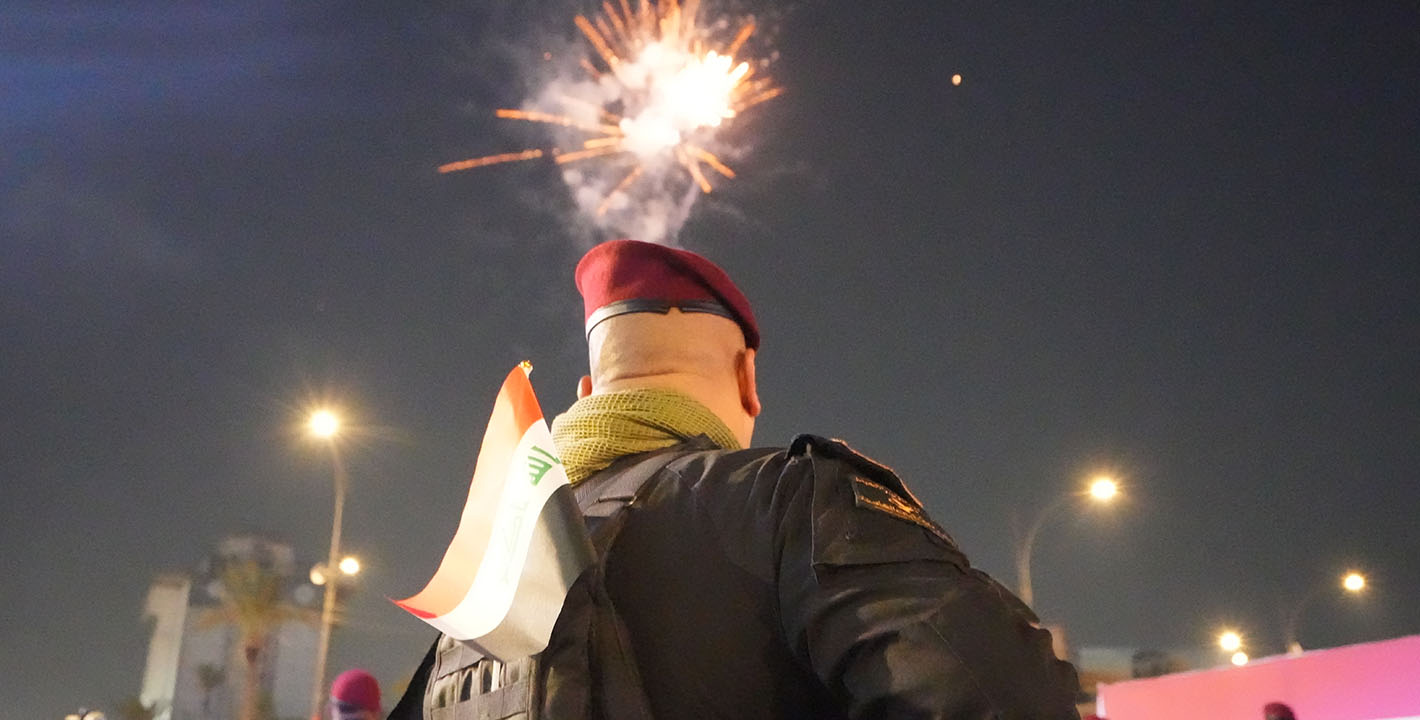
Source: Getty
As the U.S.-led Coalition withdraws, the Kurds’ reliance on Baghdad, and on themselves, will only increase.
While Iraq is celebrating the withdrawal of U.S.-led Coalition forces, the Iraqi Kurds are not in a celebratory mood. Binar Faeq Karim, a Kurdish researcher with the London Dialogue think tank, argues that Kurds feel that the withdrawal requires a funeral rather than a celebration.
“It’s not good. But this is the Iraqi decision, they invited them and now they say it’s okay, we won’t need you anymore,” Kurdish military commander and businessman Sirwan Barzani noted. He added that he is already seeing increased movement by Islamic State militants, and his forces, as well as Iraqi government forces, have spotted four or five Islamic State cells moving near the Makhmour District of Nineveh Governorate, after months of inactivity by the group.
“It’s a warning,” Barzani said. “We know what happened in 2014. Now, for sure, there will be more activity from terrorist cells, and we can see this.” Nevertheless, he also observed that Iraqi and Kurdish forces were better trained today than in 2014.
In 2014, the Islamic State took one-third of Iraqi territory and large swathes of Syrian territory. However, they were pushed out of Iraq in 2017, and out of Syria in 2019, thanks to a counter-offensive by local forces, with Coalition support. In 2024, U.S. and Iraqi officials agreed that Coalition forces would withdraw from Iraq by September 30, 2026.
The biggest threat to Iraqi Kurds today is not the Islamic State, but continued Iranian drone attacks. This is taking place in the context of the conflict between the United States and Iran, with the Iranians fearful of coordination between Washington and the Kurds, who may help Iranian Kurds to mount operations against the government in Tehran. On the day of the withdrawal of Coalition forces, an Iranian drone strike hit a civilian camp housing Iranian Kurds near Koya in Iraqi Kurdistan. Since the February 28 war launched by the United States and Israel against Iran, the Kurdistan Region in Iraq has faced around 1,000 drone and missile attacks from Iran and Iran-backed armed groups in Iraq, killing at least 32 people, nineteen of them members of Iranian Kurdish parties.
In March, there were rumors that the Iranian Kurds would launch a ground invasion of Iran with U.S. and Israeli support. However, this never materialized. On September 27, the media office of the Kurdistan Regional Government’s prime minister underlined that Iranian Kurdish groups were “mindful” of the 2023 security agreement between Erbil, Baghdad, and Tehran. The agreement aims to prevent Iranian Kurdish armed groups from attacking neighboring countries.
While Iraq initially set September 30 as the deadline for disarming Iraqi militias, under Iranian pressure it later changed its position, establishing a new deadline of June 30, 2027. This means that Iran-backed groups still represent a continued threat to its neighbors, and also to Erbil.
“Iraq’s primary internal threat comes from rogue Iranian-aligned militias that have attacked Iraq’s Kurdistan Region and neighboring countries more than 800 times this year,” a retired U.S. army colonel, Myles B. Caggins, a former Coalition spokesperson, said. “Iraq’s central government has a significant challenge to wrangle these outlaw militias that launch drones without serious repercussions.”
Therefore, Sirwan Barzani underlined, the Kurds should be provided with air defenses. “In the end, it’s Iraqi airspace. Even Iraq doesn’t have enough [air defenses]; it’s very weak in that. So, we hope that when they provide [such defenses], they can provide them for Kurdistan also.”
Ambassador Joey Hood, the former U.S. acting assistant secretary of state for Near Eastern affairs, who also served in Iraq, said that it was unlikely Iranian attacks across the Middle East would stop, including against the Kurdistan Region. Iran has not only targeted the U.S. military, but also what it defines as American interests. “This is how they can justify to themselves hitting an electricity station in the Kurdistan Region or a desalination plant in Kuwait,” he said, adding: “The federal government in Baghdad and the regional government in Erbil need to work together urgently with partners like the United States to procure and deploy the air defense systems they will need to defend against these attacks.”
Even before the U.S.-Iran war, Iran and Iran-backed Iraqi groups targeted Iranian Kurdish opposition parties, Kurdish oil and gas fields, and even Kurdish businessmen. For instance, the Kurdish billionaire Peshraw Dizayee and his 11-month old daughter were killed on January 16, 2020, in an Iranian ballistic missile strike, under the fabricated pretext that Iran was targeting an Israeli “spy headquarters.”
Admiral Brad Cooper, the commander of U.S. Central Command (CENTCOM), stated on September 30 that Iraqi security forces, including Kurdish Peshmerga forces, now “possess the capacity, leadership, and operational independence to unilaterally manage threats to their homeland.” However, a former CENTCOM planner told me that he, “unfortunately,” suspects “the Baghdad government will not be overly concerned with the incursions into the Kurdish areas.” Therefore, it increasingly looks like the Kurds will have to depend on themselves and on their relationship with Baghdad.
Also on September 30, Kurdistan Regional Government Prime Minister Masrour Barzani warned “enemies” against thinking that the Kurdistan Region was more vulnerable after the Coalition withdrawal. “We assure you that Iraqi forces now have greater capabilities than before, while the Peshmerga forces are a strong and ready force capable of confronting any type of threat that may [affect] the Kurdistan Region.”
A Coalition official who advised the Kurdish Peshmerga forces said that he found it very unfortunate that the Coalition was now leaving. “It is always good to maintain a footprint so that counter-Islamic State efforts can be monitored and military assistance can continue. Kurdistan is geographically located at a hugely important strategic point,” he said. “The [Ministry of the Peshmerga] now has to do so itself. In that respect, the Peshmerga have had ample opportunity. The autonomous region must and should remain strong enough on its own, putting individual interests aside. It is time to stand on its own two feet. There are sufficient revenues.”
Time will tell if such observations are correct. However, Nechirvan Barzani, the president of the Kurdistan Region, attended a ceremony in Baghdad marking the end of the Coalition’s withdrawal from Iraq, where he underlined the importance for Iraq to depend on its own capabilities. In doing so, he made it clear that one thing Iraqi Kurds could not avoid was increasing their reliance on Baghdad. This suggested that we may be at a foundational moment in which the central government, indeed the Iraqi state itself, plays a more consequential national role.
Wladimir van Wilgenburg
Wladimir van Wilgenburg is a Dutch journalist and author writing predominantly about Kurdistan.
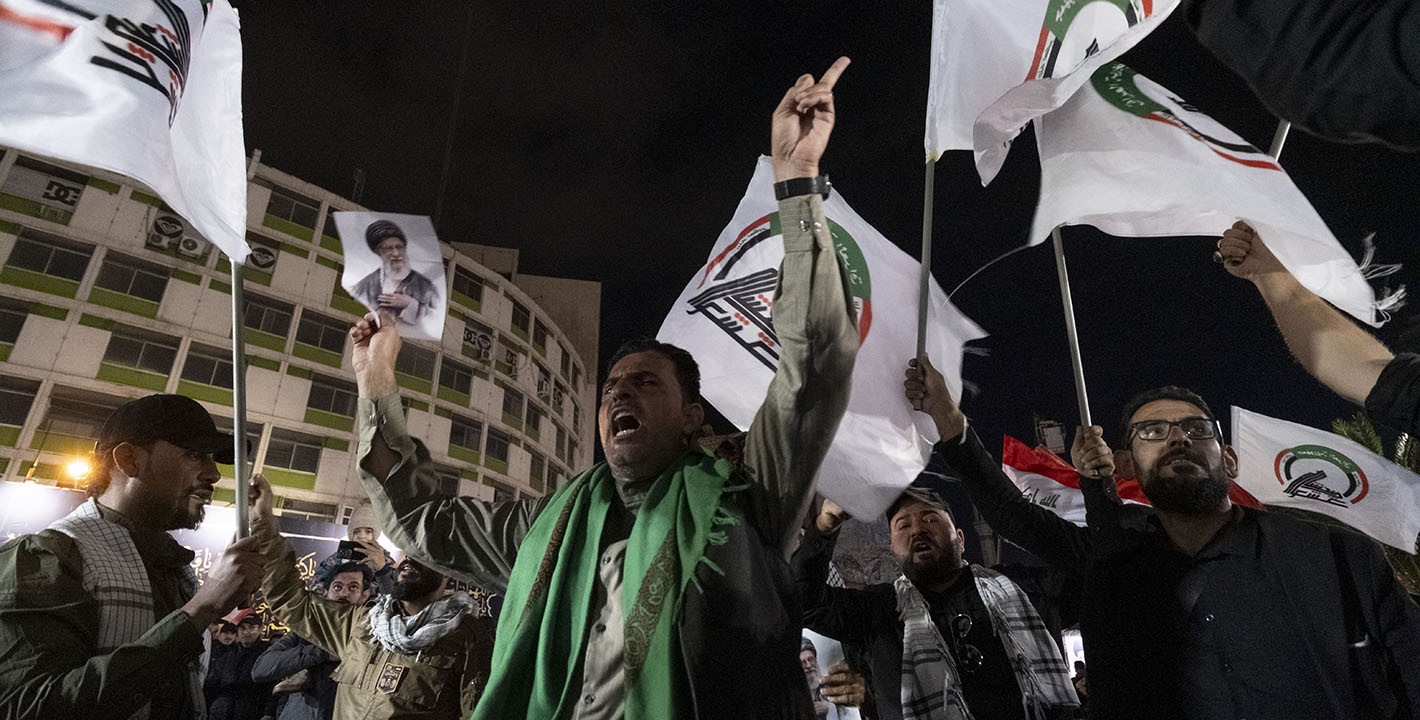
The Zaidi government’s objective to collect weapons is constrained by regional conflict, but it can take certain measures at home.
Ali Al-Mawlawi
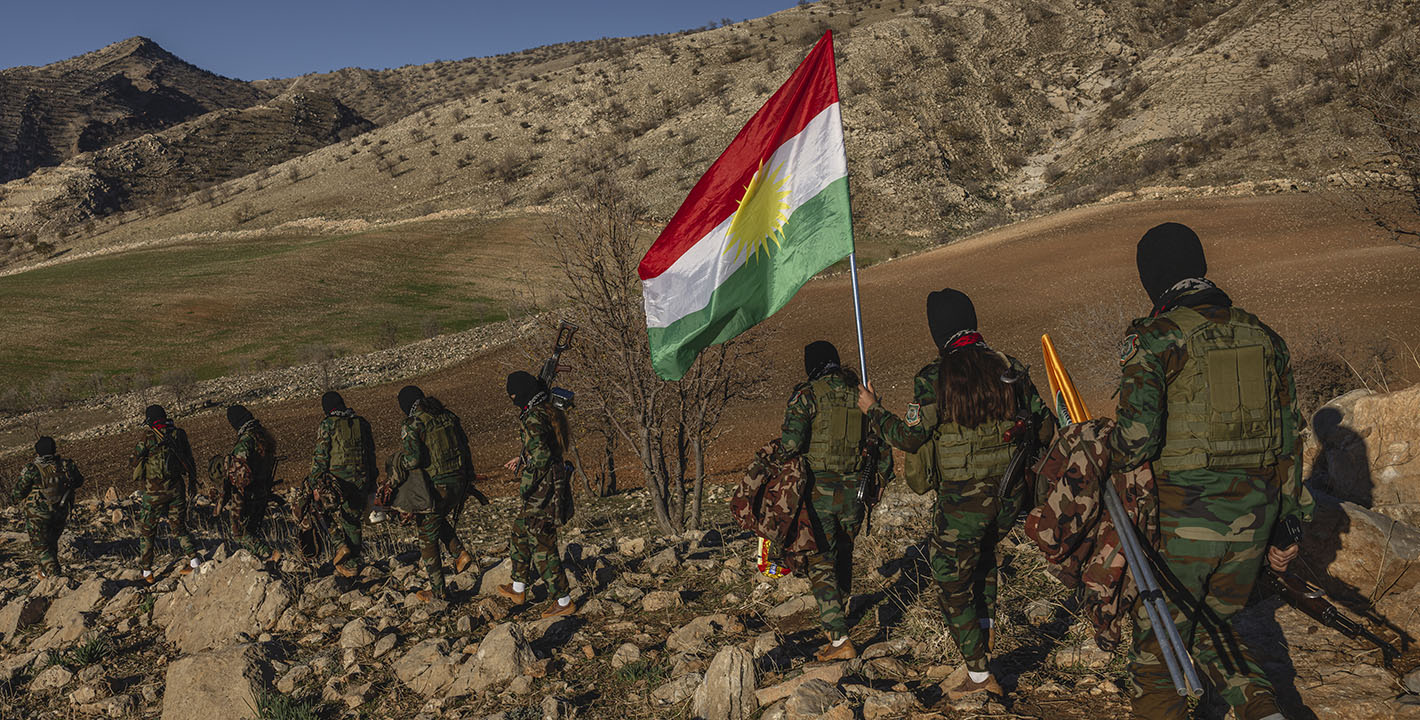
Following its deal with the United States, Iran may act against Iraq-based dissidents.
Wladimir van Wilgenburg
Any move by the United States to make good on Trump’s suggestion that Washington persuade Damascus to confront Hezbollah militarily would have catastrophic consequences.

Kheder Khaddour
As talks begin between Washington and Tehran, Beirut has an opening to advance a regional plan for the party’s disarmament.

Michael Young
In an interview, Elizabeth Thompson recalls how the country formulated a liberal constitution in 1920, before being denied by France and Britain.
Michael Young